

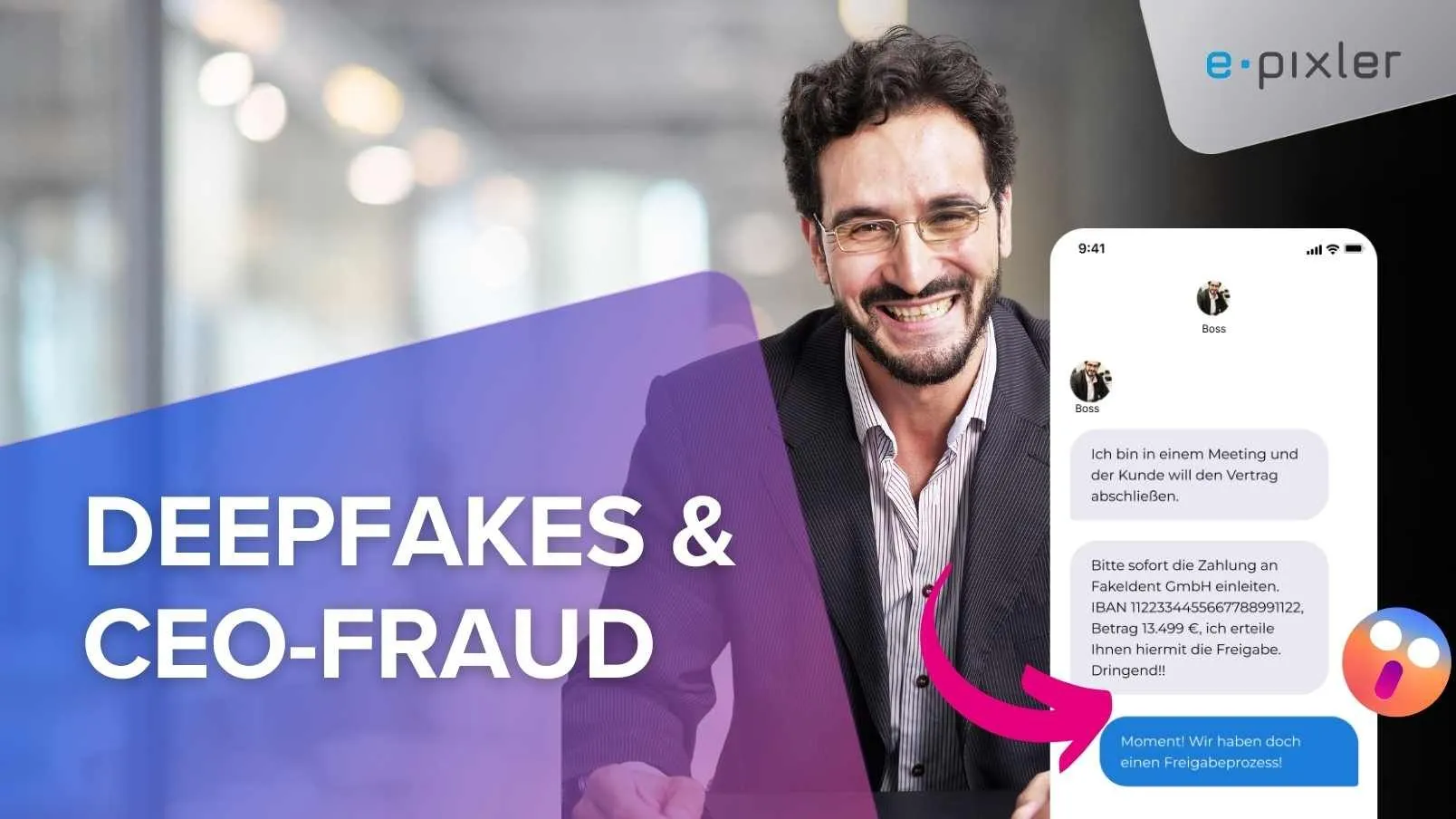
Deepfakes and CEO Fraud
What are deepfakes?
Deepfakes are artificially created videos, images, or audio files. They are altered with artificial intelligence so that they look deceptively real. A form of AI analyzes existing recordings and creates new, realistic-looking content from them.
Deepfakes are used in the entertainment industry for special effects or creative content. But they also pose major risks to companies. Cybercriminals use them to create fake identities or imitate executives. This allows them to carry out attempted fraud or spread manipulated content. Companies with large financial resources or sensitive data are especially at risk. They can become targets of CEO fraud or targeted disinformation campaigns.
A real case: CEO Fraud
In 2020, one of the most famous examples of deepfake fraud took place: fraudsters used an AI-generated voice to impersonate the CEO of a company. They instructed the finance manager to transfer 35 million dollars to a bank account. Since the voice was identical to that of the real CEO, the transaction was carried out, with 35 million dollars simply gone down the drain.
Why did that work so well? The attackers used publicly available audio recordings of the CEO, such as interviews or speeches. Modern AI software could generate realistic speech patterns from them. The combination of psychological pressure and the seemingly authentic voice ensured that the finance manager had no doubts. Such attacks show how effective deepfake technologies have become and why traditional security mechanisms are no longer sufficient.
How are deepfakes used?
Deepfakes are used in various scenarios to deceive companies and political actors and to obtain confidential information or money. They play an increasingly important role, especially in geopolitical conflicts. Manipulated videos or audio files are used to spread fake news, influence public opinion, or discredit governments. In war zones, deepfakes can serve as propaganda weapons by spreading misinformation and sowing confusion. There is also a risk in election campaigns that false statements or fake speeches are used deliberately to discredit political opponents. In addition to these political effects, the threat to companies remains high:
- CEO Fraud 2.0: Voice and video forgeries are used to give false instructions. The fraudsters deliberately rely on situations with high time pressure to prevent questions.
- Fake identities in video conferences: Cybercriminals pose as business partners or superiors. Through manipulated videos and live deepfakes, they appear credible.
- Social engineering: Employees are tricked into revealing information through manipulated media content. Emails, calls, or video instructions look deceptively real.
- Disinformation campaigns: Companies or individuals are harmed through fake videos. These can be used deliberately to damage reputations or manipulate stock prices.
How companies can protect themselves against deepfake fraud
As deepfake technologies become increasingly realistic, companies need proactive security measures:
- Training and awareness programs
Employees must learn to recognize deepfakes. Unnatural movements, distorted voices, or subtle delays in facial expressions can be clues. - Multi-factor authentication (MFA)
Important transactions should never be confirmed by voice or video alone. A combination of passwords, biometric data, and physical tokens increases security. - Technological solutions for deepfake detection
AI-based detection tools can help identify deepfakes in real time. Companies should invest in such technologies to protect themselves. - Strict communication guidelines
Companies should define clear rules for how critical business instructions are given and verified. Suspicious changes in communication style should always be checked.
Why companies must prepare preventively
Deepfakes are not a vision of the future, but a current threat. Companies that do not prepare for them risk becoming victims of fraud, financial losses, and reputational damage. Through training, technological measures, and conscious security practices, however, the risk can be significantly reduced.
As a full-service digital agency, we naturally also offer ensuring data protection within your own company, as well as the detection of fraud emails or phishing emails.
Aktuelles zu „General“
Alle Beiträge anzeigen


Sie wollen ein Projekt mit uns realisieren?
Schreiben Sie uns gern oder rufen Sie uns an unter
